Log inRequest demo

Exabot Respond

Your AI incident responder, coordinating action across the kill chain

Exabot Respond executes response across endpoint, identity, IaaS, SaaS, and email, with out-of-the-box playbooks for common scenarios and new ones built in natural language. Deterministic steps where precision matters. AI reasoning where context does. Humans make the decisions that need judgment.

Request demo
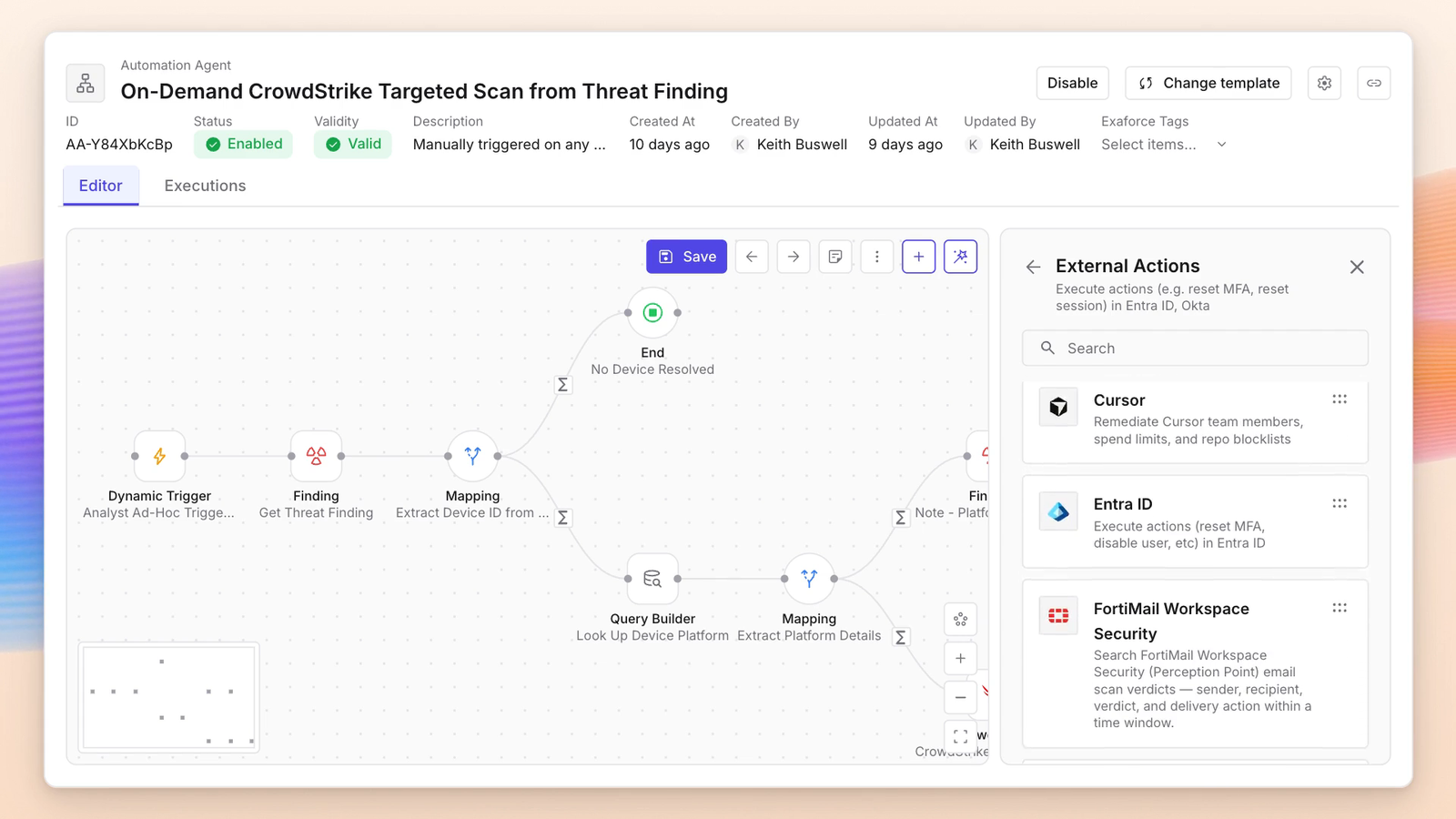
The automation agent editor showing an on-demand CrowdStrike targeted scan built from a threat finding, with the external actions panel open beside the workflow.

Intelligent response that your team can trust

Exabot Respond turns triage into consistent, auditable actions. AI reasoning nodes analyze context to build agents that automate busywork, enforce policies, verify with users, execute containment, and adapt safely with guardrails, approval gates, and full audit trails.

Build workflows that adapt and reason

Go beyond rigid SOAR playbooks with AI agents that make intelligent decisions within your workflows. Automation Agents combine deterministic logic with AI-powered reasoning nodes that analyze context from our semantic and behavioral models, extract data from connected sources, connect identities, evaluate conditions, and recommend appropriate actions. This makes workflow creation faster and response outcomes smarter without complex scripting.
Response actions list

Leverage powerful tools and integrations

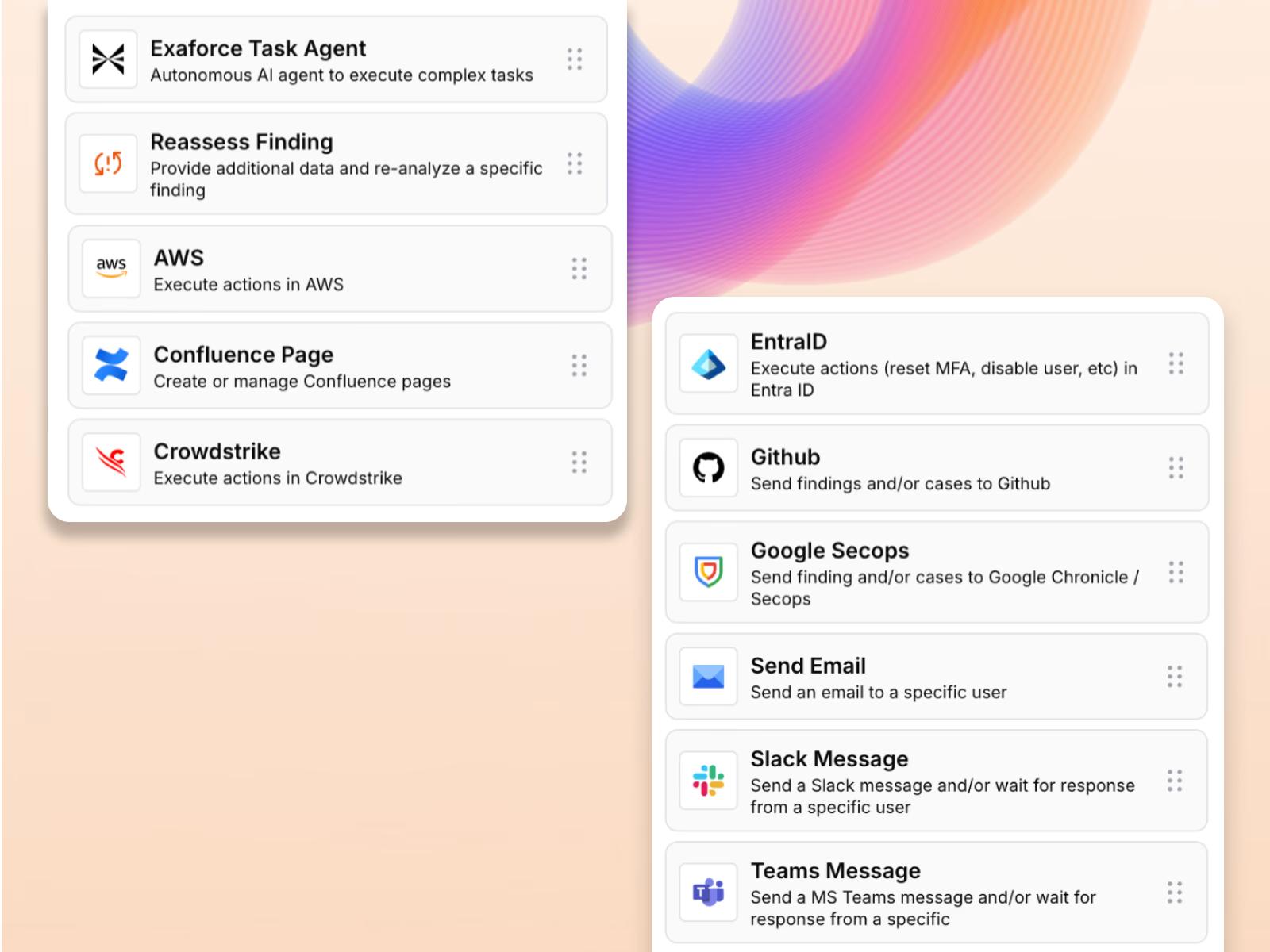
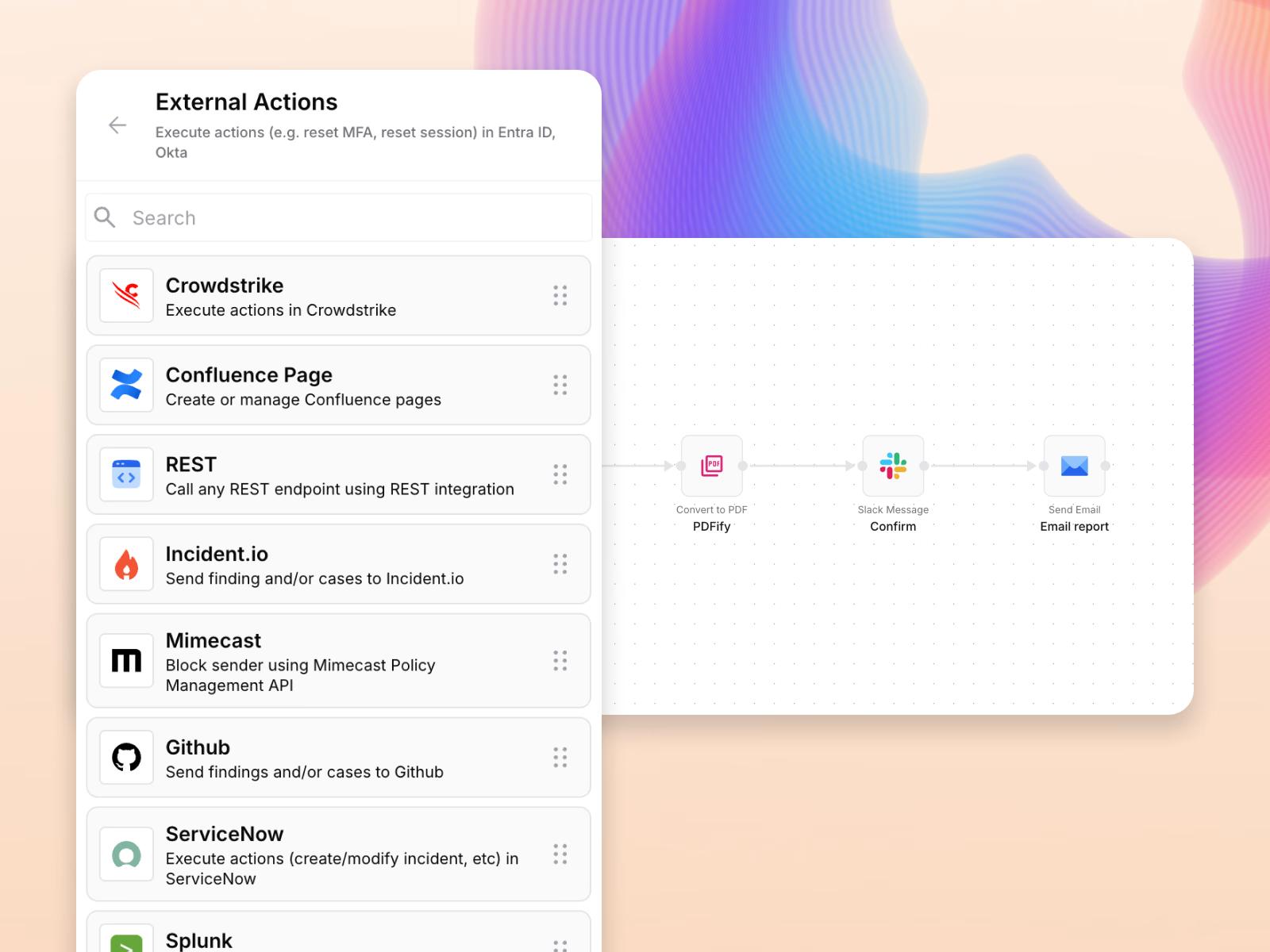
Automation Agents use a comprehensive toolkit to gather intelligence and take action. They can search the web via Perplexity for real-time context, validate IPs and domains with reputation services, enrich IOCs from threat intel feeds, call third-party REST APIs and webhooks, and interact with connected platforms. Agents orchestrate these tools to combine evidence from multiple sources, add external context, and execute coordinated responses.

User behavior report

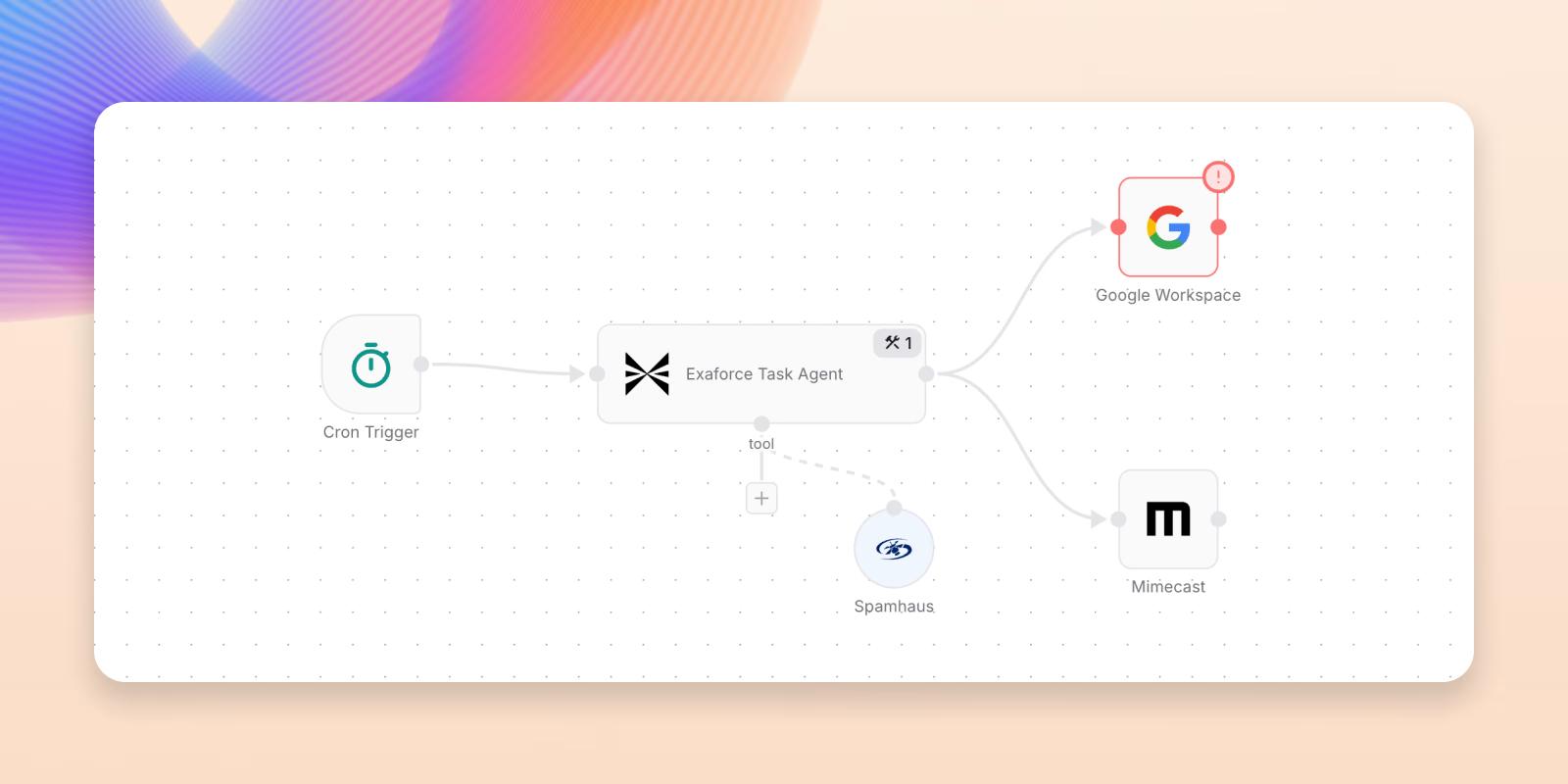
Schedule automated threat hunting

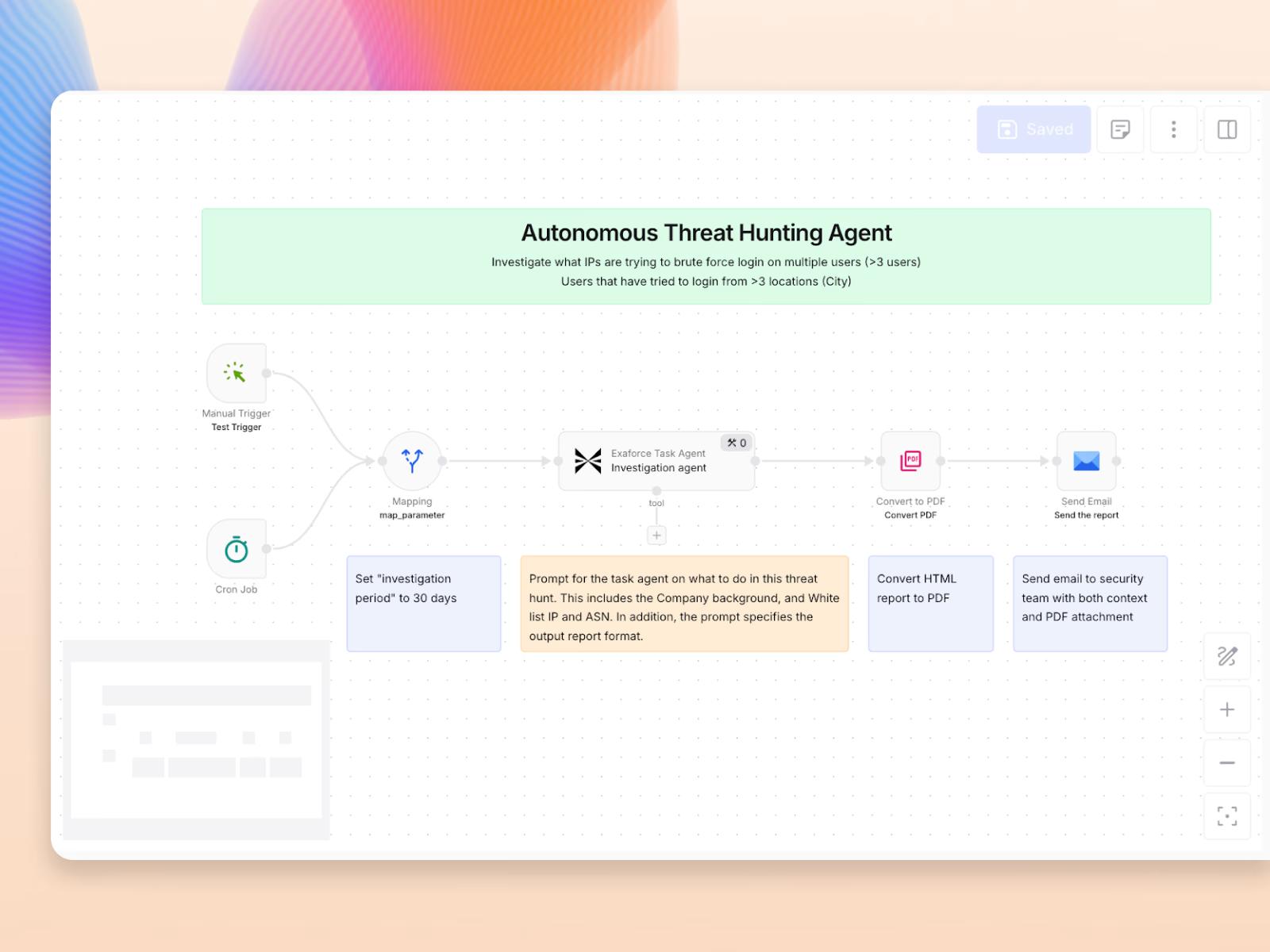
Because Exabots have visibility into your full environment, including connected identities, cloud activity, SaaS behavior, and endpoints, you can build agents that go looking for threats before alerts fire. Ask a hypothesis in plain English, and the agent queries across your infrastructure and returns findings. Run it on a schedule, trigger it after an incident, or wire it into an ongoing monitoring workflow.

Trigger actions popup

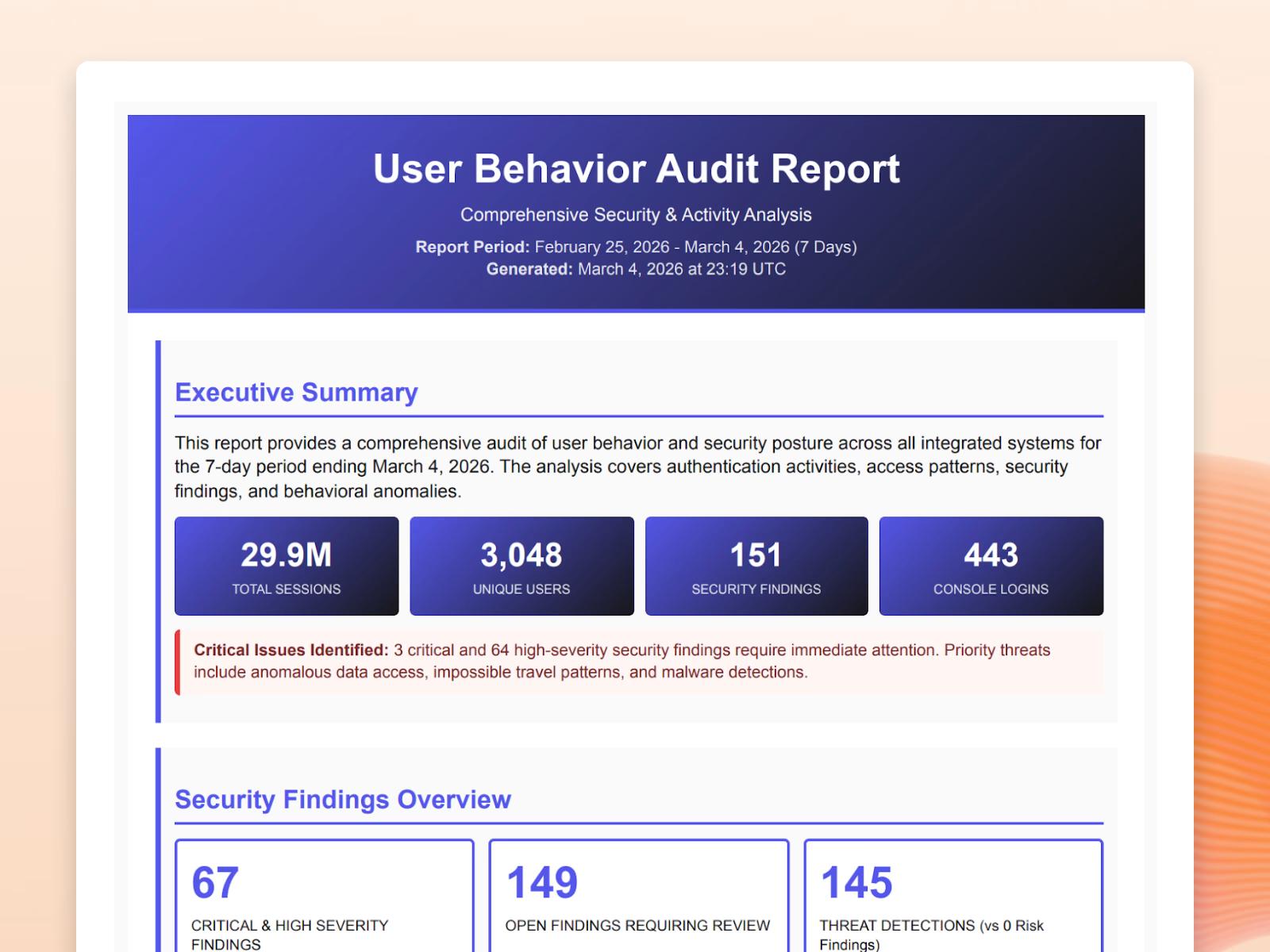
Automate custom reporting

Eliminate hours of manual reporting with agents that gather evidence across the platform, analyze findings and trends, and generate tailored, audit-ready reports for compliance, post-incident reviews, executive briefings, and threat summaries.

Response actions list

Contain threats before they escalate

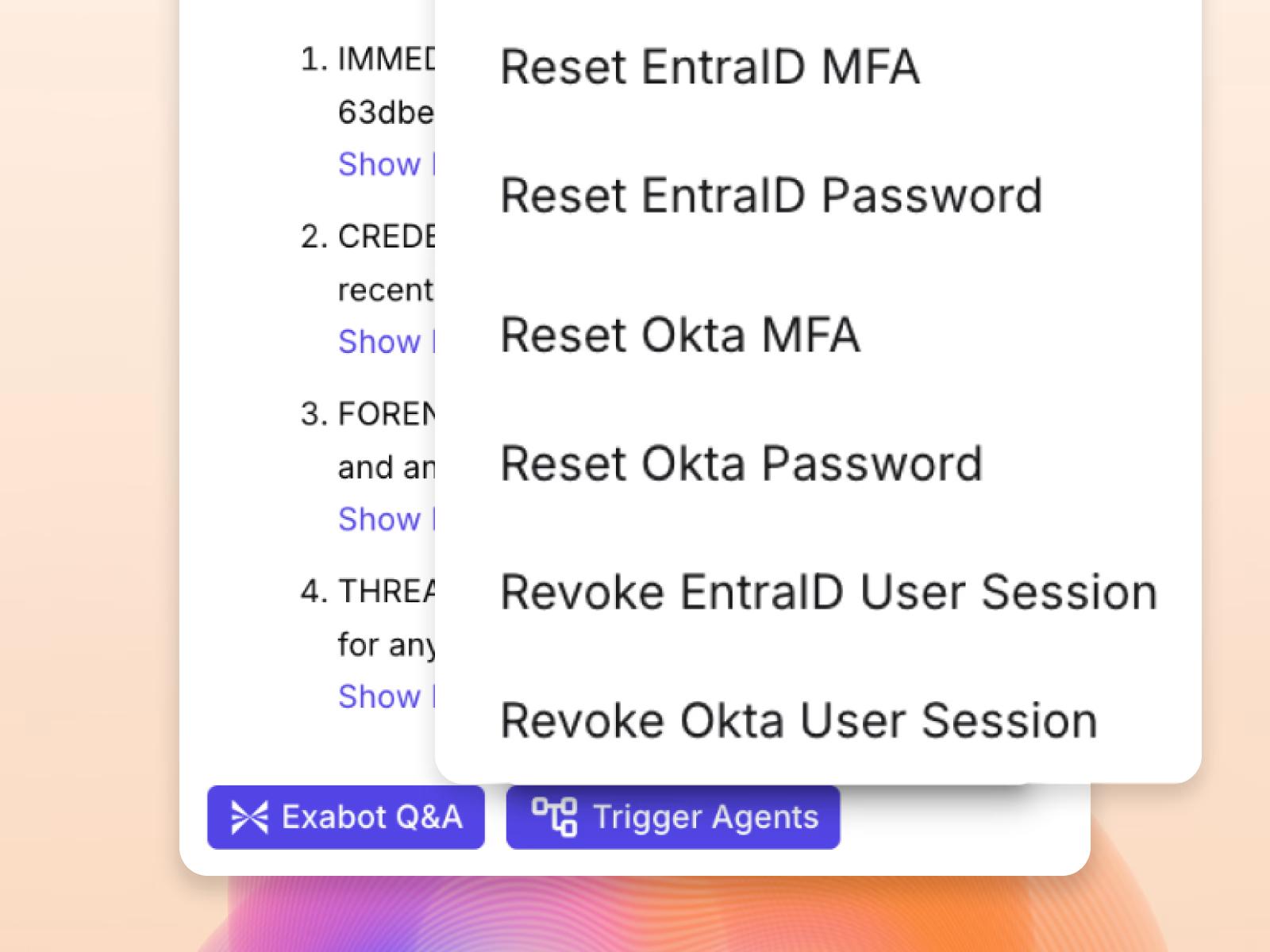
Take decisive action to stop threats in their tracks. Isolate cloud instances, quarantine or delete malicious emails, block IPs, disable endpoints, reset MFA or passwords, suspend users, and revoke sessions across Okta, Entra ID, AWS, email platforms, and more. Built-in guardrails ensure every response is secure, approved, and reversible.

Threat hunting agent

Featured response capabilities

Purpose‑built to accelerate containment while minimizing risk.

Automation workflows

Visual workflow editor to build custom workflows with deterministic and agentic steps.

Slack confirmations

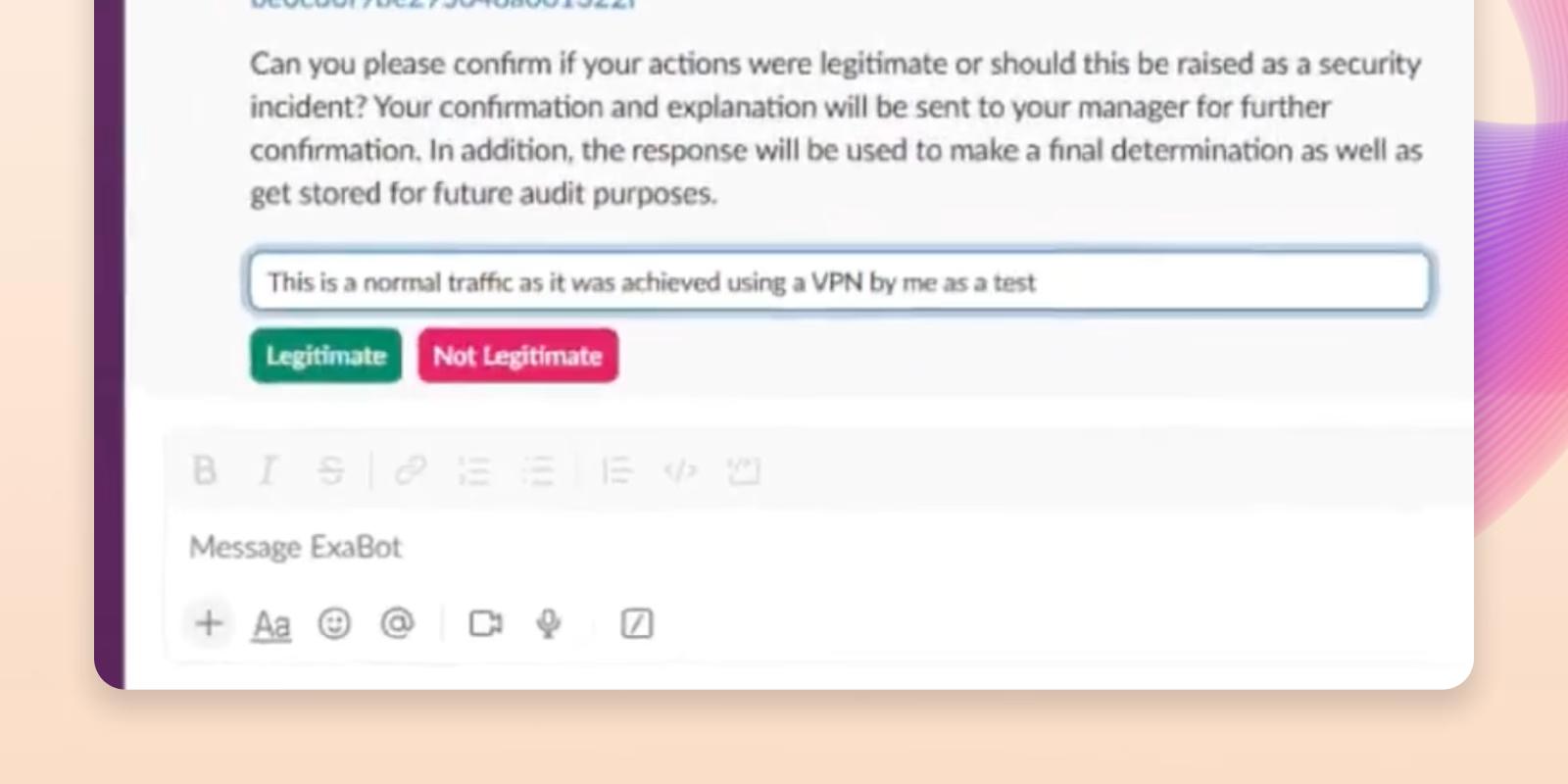
OOTB prompts for user and manager validation with buttons, timeouts, and auto‑escalation.

Trigger endpoint actions

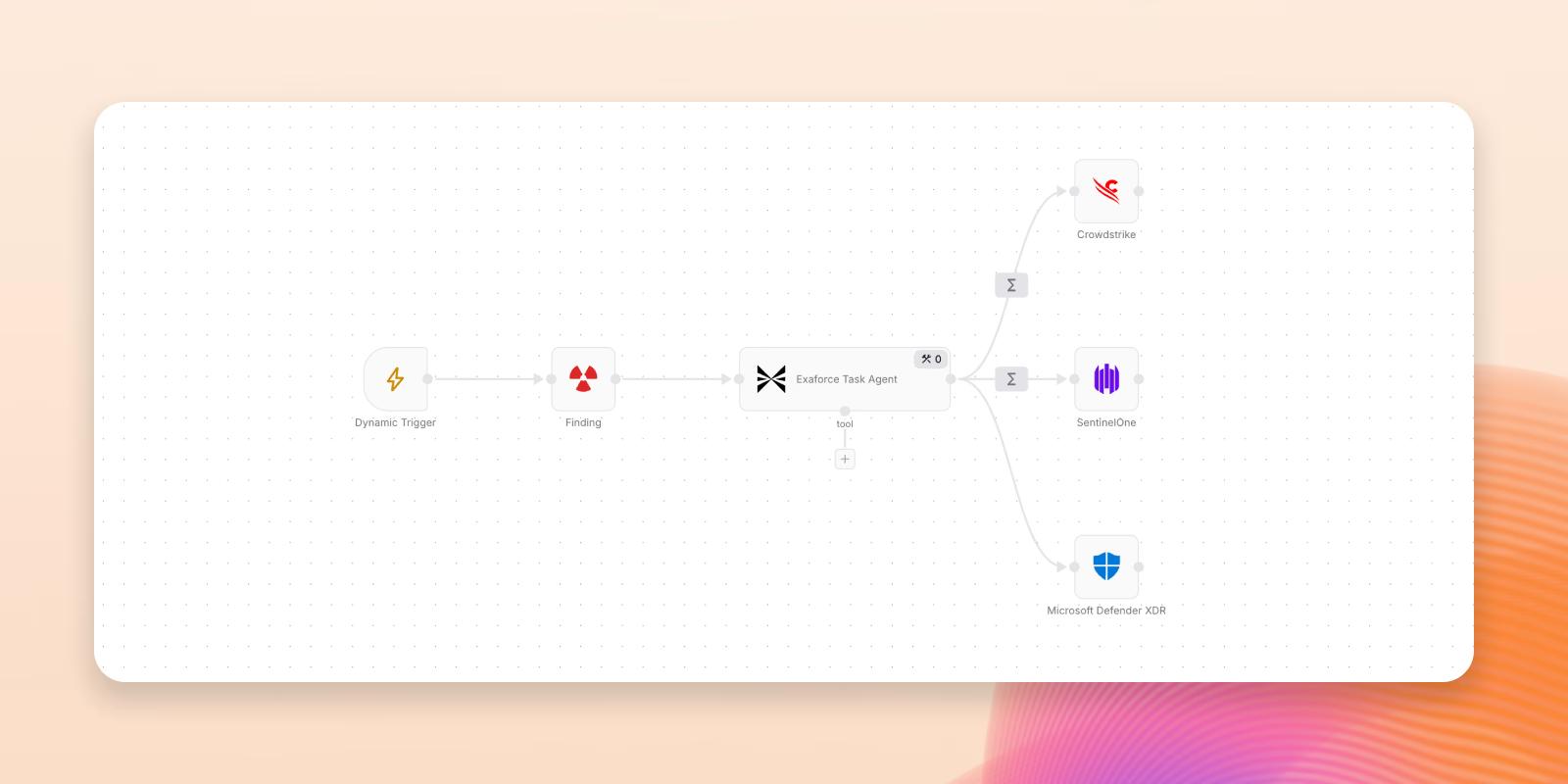
Quarantine affected endpoints and enrich alerts in real time with up-to-date device context to accelerate investigation and response.

Trigger IaaS actions

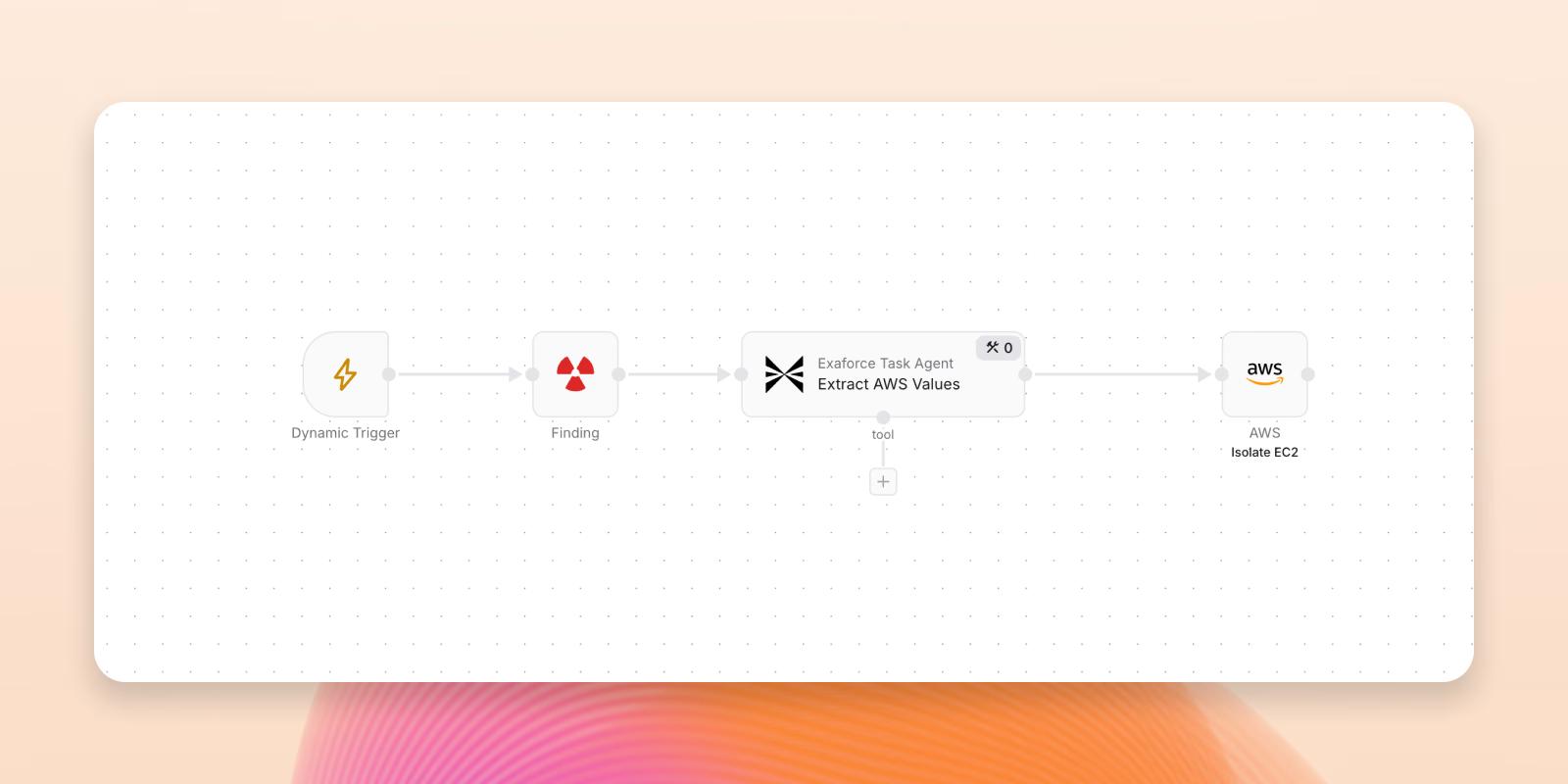
Isolate affected instances or hosts, disable compromised users, and update security groups to contain IaaS threats.

Trigger SaaS actions

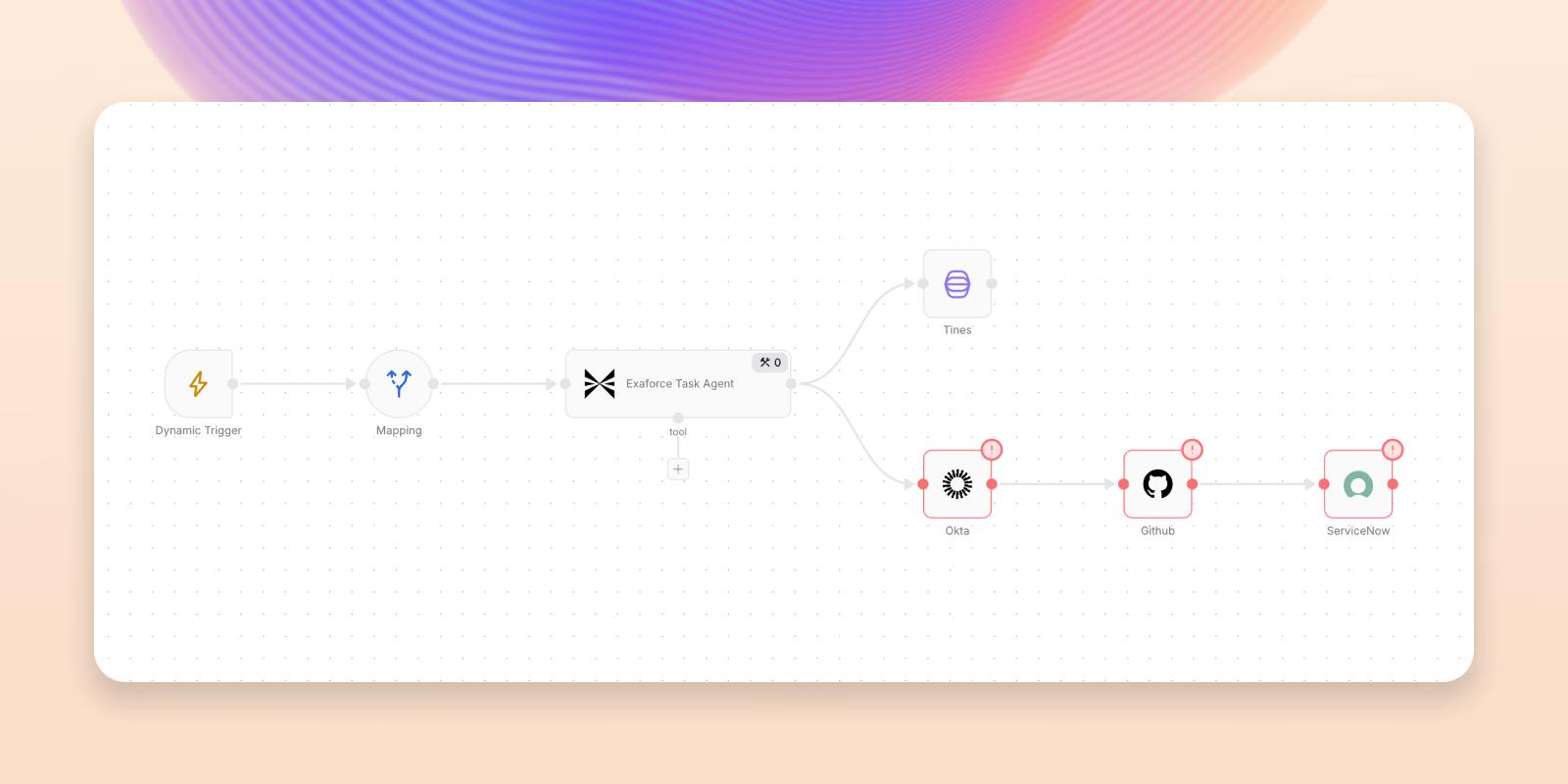
Reset users, revoke access, automatically create service tickets, and more SaaS response actions to contain and remediate incidents.

Trigger email actions

Quarantine or delete malicious emails, validate whether an IP or sender is spam or dangerous, and take additional response actions to stop email threats.

LottieFiles

We had a security event that Exaforce noted was a true finding, and the MDR team joined immediately to help tackle it. Their automation and expertise gave us the context and remediation steps we needed. We closed the incident faster and felt confident in our security coverage.

Jawish Hameed

Vice President of Engineering at LottieFiles

Read case study

Frequently asked questions

Can Automation Agents execute with and without human approval?
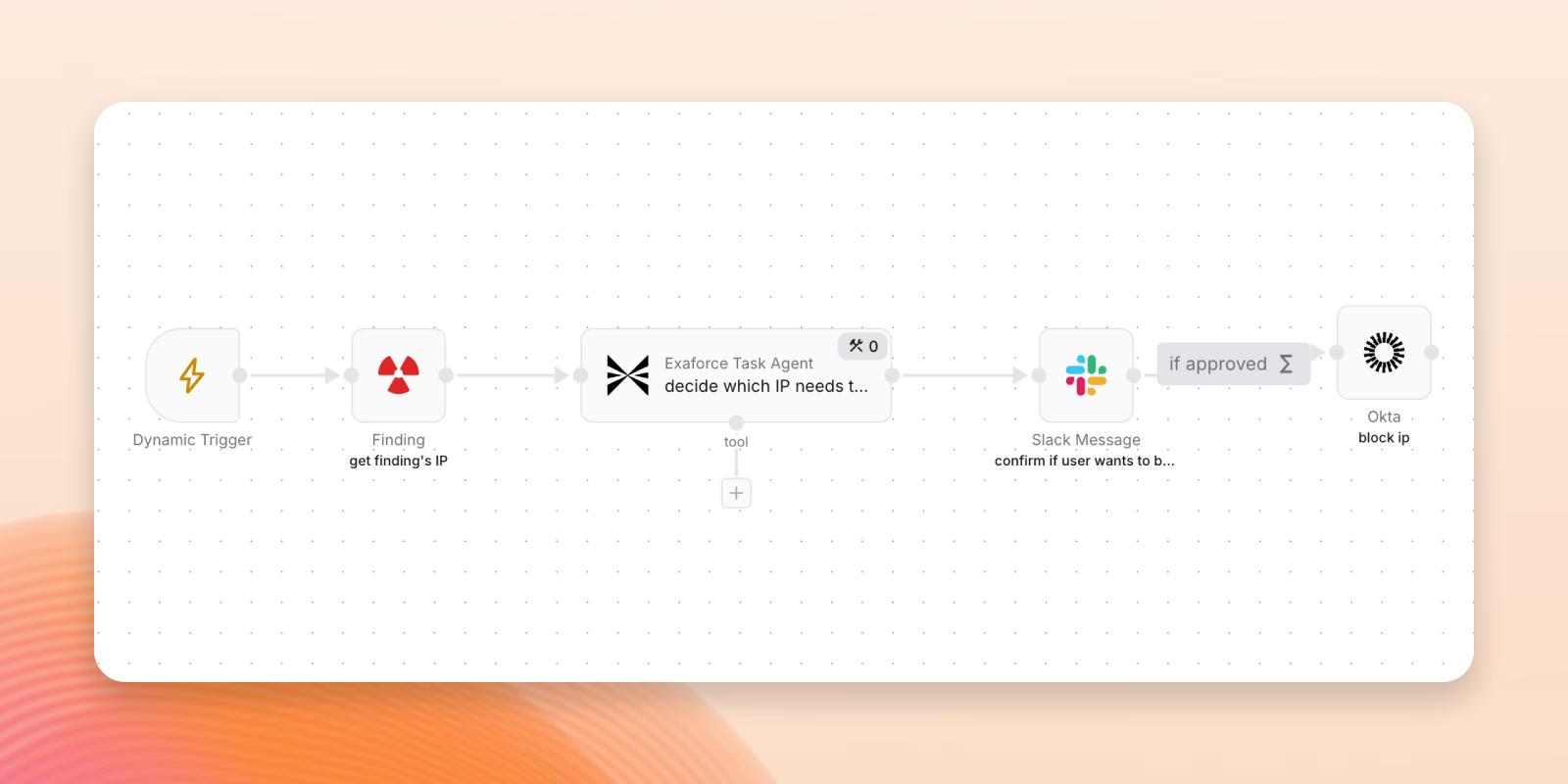
Yes. Automation Agents can run reasoning-enabled workflows autonomously or with human approvals, and you can mix both in the same workflow with optional timeouts. Workflows can trigger automatically, on a schedule, or manually, then apply approval gates only where needed based on action sensitivity, user risk, confidence thresholds, or business hours. Approvers get full context in Slack/Teams/Email, timeouts fall back to safe defaults (pause, rollback, or limited containment), and every decision and approval is fully audited.
Can I build custom workflows?
Yes. You can build custom workflows in a visual drag-and-drop builder using nodes for conditions, actions, approvals, AI reasoning, loops, and branching. Mix deterministic steps (collect specific data, run precise actions, if/then logic) with reasoning nodes that interpret context and recommend or drive the next step, with no coding required.
How does the AI task agent node work?
Task Agent nodes with AI reasoning receive structured input from workflow context and apply intelligent decision-making via natural language prompts, producing a decision and rationale that downstream steps can use for reporting, branching, containment, or escalation. They can also pull in additional context by analyzing signals from our semantic and behavioral models, extracting data from connected sources, linking identities, and evaluating conditions to recommend the appropriate next action.
How is Exabot Respond different from a traditional SOAR?
Traditional SOARs often exist to compensate for gaps in SIEMs’ alert context, which means teams spend time wiring integrations, maintaining enrichments, and adapting rigid playbooks. Exaforce operates on richer, unified security data across logs and configuration, so the context and enrichments are already there when you open the alert. You can investigate and automate actions with a modern visual builder and AI Agents, without the overhead of standing up and maintaining separate integration chains. Guardrails, approvals, and explainability are built in, and for edge cases that still require it, Exabot can trigger an external SOAR playbook.
How is Exabot Respond different from a traditional SOAR?
Traditional SOARs were built to compensate for gaps in SIEM alert context. Exabot Respond was built as part of an agentic SOC platform, so the context and visibility are already there. You're not connecting tools together. You're acting on data the platform already has.